
Which transfer quarterbacks are for real?
Five transfer quarterbacks took big leaps at new schools, and their efficiency backs all five. Darian Mensah is the surest thing; history says the other risers will fade some but likely stay above their 2025 level.
Jackson, Chiles, Leavitt and Lopez: four of the five biggest transfer QB jumps
Tayven Jackson, Aidan Chiles, Sam Leavitt and Gio Lopez each graded about 20 to 37 points better than last season after changing schools. Darian Mensah went from very good at Duke to No. 1 in FBS at Miami.
Their efficiency backs it up. History says to expect some fade, and Byrum Brown shows a move can go the other way.
It's not just the grades: their efficiency jumped too
PFF grades every throw on film. EPA (expected points added) measures what each dropback did to the scoreboard. Both say the five risers got better.
Their passing efficiency jumped too, after adjusting for opponents
- Jackson, Chiles and Lopez ranked 93rd, 64th and 96th of 135 qualified FBS passers in 2025. This year they are 18th, 7th and 17th of 101.
- Mensah is 1st in FBS at +0.67 per dropback, the same figure as Miami's passing game. He was already 10th at Duke.
- The schedule matters for Lopez and Jackson: 3rd and 2nd before the opponent adjustment, 17th and 18th after. Leavitt moves the other way, 28th raw to 9th adjusted, against tougher pass defenses.
- Brown and Joseph lost PFF grade, but not efficiency: Brown held level and Joseph improved.
Hot starts by transfers usually cool: about 40% of the jump sticks
Since 2016, 22 transfer QBs improved their game grades by 7+ points over their first 8 games. They gave back most of it, but stayed better than before.
Transfers who start hot give back more than half of the jump
- Transfers kept 4.5 of an 11.1-point jump (41%). 82% still graded above their previous season the rest of the way.
- Returning QBs kept more (7.1 of 11.5, 62%), but with only 22 transfers the gap is within the noise.
- All five of this year's risers jumped at least 9.7 points on the same game-grade scale, from Mensah (+9.7) to Jackson (+22.6).
Every one of them beat last year's starter at his new school, but that test is soft
If the new school did the work, last year's QB there should have graded well too. Mostly he didn't. But Brown and Joseph, who got worse, beat their predecessors too, and LSU, North Texas and Auburn changed head coaches.
- The line got worse, not better: five of the six play behind a lower team pass-block grade than in 2025. Jackson is the exception.
- Receivers helped Leavitt most: LSU's pass catchers averaged 2.06 yards per route run a year ago, against 1.26 for his Arizona State group.
- The risers improved in a clean pocket, the more repeatable part: Chiles 73.9 to 90.9, Jackson 68.0 to 93.4, Leavitt 69.5 to 91.2, Lopez 73.7 to 90.8.
- Mensah's gain came under pressure (46.9 to 77.8 on 66 dropbacks), the less stable part; his clean-pocket grade barely moved.
Team by team: where each quarterback leaves the playoff race
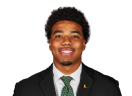 92.8PFF passing grade, 1st of 122 FBS QBs
 98%ESPN FPI playoff odds
- Saturday at Notre Dame, whose pass defense ranks 12th in FBS per play.
 89.5PFF passing grade, 6th in FBS
 49%ESPN FPI playoff odds
- At the typical rate (0.57 interceptions per turnover-worthy play) he would have about 3 interceptions, not 8.
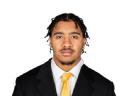 89.0PFF passing grade, 8th in FBS
 59%ESPN FPI playoff odds
- Pressured on 39% of dropbacks and still grades 72.6 when pressured.
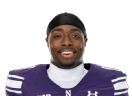 86.4PFF passing grade, 14th in FBS
 8%ESPN FPI playoff odds
- He held up against two top-11 FPI defenses: 82.7 at Indiana, 81.8 at Oregon (both losses).
 92.3PFF passing grade, 2nd in FBS
 35%FPI odds to win the American (playoff: 2%)
- His pass defenses have been soft: he ranks 2nd unadjusted, 18th adjusted.
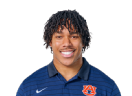 85.7 → 69.5PFF passing grade, South Florida to Auburn
- He kept his coach, Alex Golesh, so the scheme came along; his clean-pocket grade fell from 90.8 to 76.5.
Mensah gets the Heisman talk. Leavitt's picks get the blame.
- Bleacher Report's David Kenyon (Oct. 27): Mensah "has been similarly fantastic for 7-0 Miami," while Leavitt "faded from the Heisman radar because of a turnover-plagued start."
- Before the season, an SEC coordinator told ESPN's Adam Rittenberg Leavitt is "not the talent level that a normal LSU quarterback would be" (via Saturday Down South, Aug. 10).
What the data adds: Leavitt's turnover problem is mostly bad luck (5 turnover-worthy plays, 8 picks), and he rates 9th in FBS in adjusted EPA per dropback, siding with the player over the preseason doubt.
Expect some fade, but not a return to 2025
Fit on 580 QB seasons, the projection gives back a lot of each jump. Even so, the four big risers are strong favorites to keep grading above last year. Mensah's chance is lower only because his bar is so high (85.0 at Duke).
The four big risers should keep grading above their 2025 level
Tayven JacksonNorth TexasAidan ChilesNorthwesternSam LeavittLSUGio LopezWake ForestDarian MensahMiamiByrum BrownAuburn- Alabama at LSU: a swing game for both teams' playoff hopes (LSU 49%, Alabama 60%). Watch Leavitt's turnover-worthy plays, not just his interceptions.
Questions people ask
Is Darian Mensah the best quarterback in college football in 2026?
By the numbers, yes so far. Through Oct. 31 he leads FBS in PFF passing grade (92.8) and in EPA per dropback adjusted for opponents (+0.67), with 25 touchdowns and 1 interception.
Why is Sam Leavitt throwing so many interceptions at LSU?
Mostly bad luck. Leavitt has 8 interceptions but only 5 turnover-worthy plays by PFF's charting; at the typical rate of 0.57 interceptions per turnover-worthy play, that is about 3.
Do transfer quarterbacks keep playing well after a hot start?
Partly. Since 2016, transfers whose grades jumped 7+ points in their first 8 games kept about 40% of the gain the rest of the season, and 82% still finished above their previous level. It rests on only 22 cases.
Which transfer quarterback got worse in 2026?
By PFF grade, Byrum Brown fell the most among Power 4 transfers: from 85.7 at South Florida to 69.5 at Auburn, with pressure on 36% of his dropbacks. His EPA per dropback held level.
How we did this: PFF passing grades and charting (season and per game), Snapp's college play-by-play with EPA, ESPN FPI, regular-season games through Oct. 31, 2026. Year-over-year comparisons use QBs with 150+ dropbacks in both seasons. Per-play ratings use ESPN play-by-play EPA (expected points added: how much each play changed a team's expected points) for runs and passes in games between FBS teams, weight every play, and adjust each offense and defense for every opponent faced (solved jointly until the ratings stop moving). Interception and fumble return touchdowns are charged to the defense's side of the play, not credited to the offense. Garbage time is removed: plays with the score margin over 38 points in the 2nd quarter, 28 in the 3rd or 22 in the 4th. Run and pass unit ratings use the same method on runs only or dropbacks only (dropbacks include sacks). QB EPA per dropback counts passes and sacks (not scrambles) and subtracts each opponent's adjusted pass defense; ranks are among FBS QBs with 150+ such dropbacks (135 in 2025, 101 in 2026), and 2025 uses the same rules. Expected interceptions use 0.57 interceptions per PFF turnover-worthy play, the 2026 FBS rate. History: average single-game PFF grade weighted by dropbacks, first 8 games vs the rest, 2016 to 2025; a transfer is a QB whose school changed from the prior season. Projection: linear fit of rest-of-season game grade on first-8-game grade and prior-season grade (580 QB seasons, typical miss 7.3 grade points). LSU, North Texas and Auburn changed head coaches after 2025, so for those three the predecessor comparison is the same school, not the same offense.